Corporate Governance and Risk Management

Kaori is committed to corporate governance and sustainable management, adhering to the principles of business integrity and transparency in information disclosure. The company follows regulations, enhances operational performance, strengthens internal controls and personnel management mechanisms, and maintains ISO management system certifications. This is all part of fostering a high-quality corporate culture that embodies the Company's business philosophy and ethical standards.

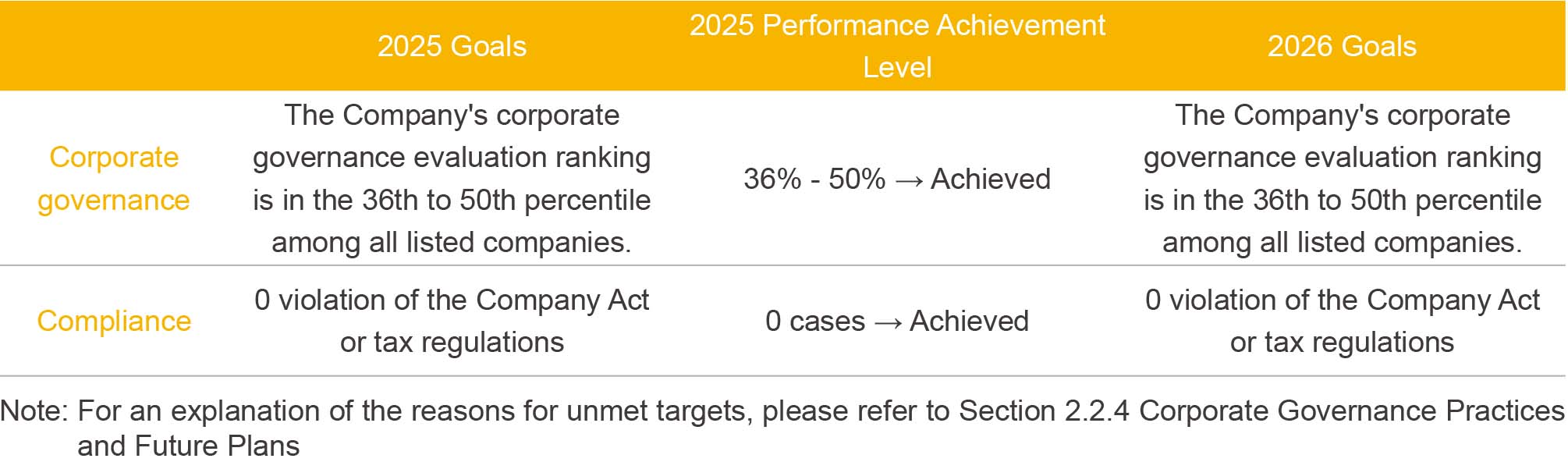
The short-, medium- and long-term indicators for corporate governance and sustainability management are as follows:

The goals and performance related to key issues are outlined as follows:

2025 Sustainable Highlights Performance

ISO 27001:2022 Information Security Management System

0 %

Continuous improvement of corporate governance indicators evaluation.

0 %

0Cases
The Company Act or tax regulations

In 2025, there was no record of violation of safety and health, environmental protection, fire safety, and other laws and regulations.

Promoting various sustainable policies

Led by the chairman, the company sets a high-level ESG vision and long-term strategy. Together with top executives from various fields, the company organizes environmental management, social management, corporate governance, and sustainable product groups to closely interact with customers, government, and various sectors of society to enhance corporate transparency. The company is fully committed to promoting sustainable responsibility. The company expects to act as an ethical and responsible corporation, playing the role of a global corporate citizen while pursuing profitability. The company strives to promote the development of corporate social and environmental responsibility, create a continuous source of operational driving force and competitiveness, and achieve the goal of sustainable operation.

Corporate governance evaluation objectives policy

Providing guidance for evaluating corporate management and operational mechanisms. Examining aspects such as internal operating structure, risk management, financial and institutional transparency, and shareholder protection. Assessing corporate governance, enhancing specific goals and strategies for the effectiveness of the board of directors.

Our Focus Issues

01
Business Integrity

Kaori has implemented a business integrity policy with the Board of directors' approval and developed its own accounting policies and internal control system to enforce business integrity. Internal auditors have been assigned to audit compliance on a regular basis. Kaori has clearly stated its core values of innovation, quality, responsibility, and honor in external communications and established business integrity policies that all directors, senior managers, employees, and the controller must obey when carrying out their duties. The Company has established the "Business Integrity Code of Conduct," "Business Integrity Procedures and Behavioral Guidelines," relevant "Ethical Conduct Guidelines," "Investor Relationship Management Policy," and "Risk Management Policy" in accordance with the "Ethical Corporate Management Best Practice Principles for TWSE/TPEx Listed Companies."

Building an Integrity Culture

Kaori upholds“innovation, quality, responsibility, and honor”and recognizes integrity as the core of its corporate culture. By implementing a set of ethical behavior guidelines, the Company enforces values such as fair trade, avoidance of improper gains, protection of business secrets, human rights, and compliance in all aspects of business operations. The Company has implemented rigorous preventive and disciplinary measures to enforce high ethical standards among employees and prevent violations when engaging in business activities. Misconduct reporting channels have also been set up, and any employee that violates the behavioral guidelines will be disciplined according to the Work Rules. 

In addition to tracking yearly internal control self-assessments conducted by various departments and making adjustments to policies and laws that affect corporate operations, Kaori also reiterates the importance of corporate governance and ethics to employees from time to time. Employees who commit violations of the law, safety rules/regulations, employment contracts, or commercial ethics will be subject to legal consequences and disciplinary measures. These violations will also be considered in employee performance evaluations as part of our efforts to build a culture of integrity within the organization.

Complete Grievance Systems, Channels, and Investigation Procedures

Employees are required to report, using the following channels, any violations of laws, policies, or contract terms or any attempts to exploit the vested authority for improper gains against the Company's interests:

  • Physical Mailbox
    No. 5-2, Jilin North Road, Zhongli District, Taoyuan City 32030 Kaori Heat Treatment Co., Ltd. - Special Assistant's Office
  • E-mail:csr@kaori.com.tw

Investigation Procedures

02
Compliance

Kaori complies with regulations by regularly collecting and compiling relevant business-related laws and regulations for identification. If there are any new or revised regulations, the responsible departments immediately review whether the current business practices and operations are in compliance. Additionally, they assist in communicating and promoting these regulations to all departments. To protect the legal rights and interests of the Company, the Company periodically holds legal courses and produce legal materials to enhance employees' legal knowledge.

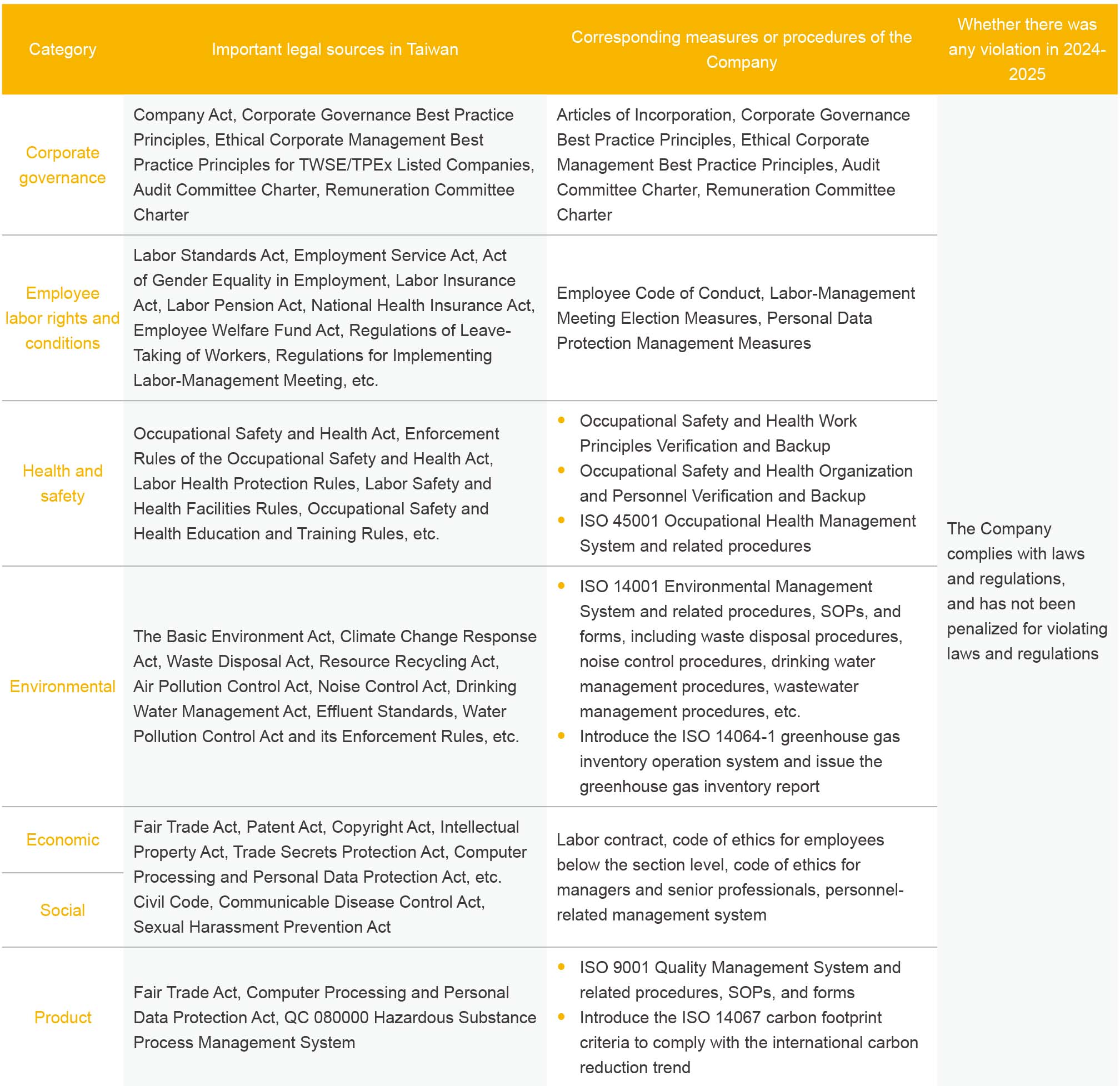
The Company's compliance with corporate governance, environmental, economic, and social regulations, including relevant important legal sources, internal policies, or procedures, as well as any violations in the past two years (2024–2025), are detailed in the table below:

Kaori has several effective controls in place to ensure compliance. The Company checks new regulatory amendments on a monthly basis and conducts compliance audits on all plant sites on a yearly basis. In 2025, there was no record of violation of safety and health, environmental protection, fire safety, and other laws and regulations. Aside from the above, no major compensations or losses were reported in annual internal audits.

03
Cybersecurity

Kaori has established an information security management system in accordance with internal and external stakeholders’ concerns and by following the steps of the international information security management system standard, and has formulated information security policies to serve as the basis for the overall establishment, development, implementation, operation, monitoring, review, and continuous maintenance and improvement of the information security management system, and has established information security management policies and objectives based on the Company's business activities and risks. To strengthen the emergency response capabilities for information security incidents and ensure the security of the information assets of the Company and its customers, the following measures are adopted:

1. An Information Security Committee has been established, which regularly reports on the implementation status of information security management to the Board of Directors every year. (The date of the most recent report to the Board of Directors was December 18, 2025.) 

2. The Company joined the Taiwan Computer Emergency Response Team / Coordination Center (TWCERT/CC) in June 2023 as an official member, thereby collecting various threat intelligence, and conducting internal information security risk audits, comparisons, and corrections. Collect various types of threat intelligence for internal cybersecurity risk assessment, benchmarking, and remediation.

3. A dedicated information security chief and 2 dedicated personnel have been established to regularly (quarterly) report to senior management under the framework of the Information Security Committee. 

4. The Company passed the ISO 27001:2022 information security management system certification in December 2023, with the certificate validity period extending to February 28, 2027.


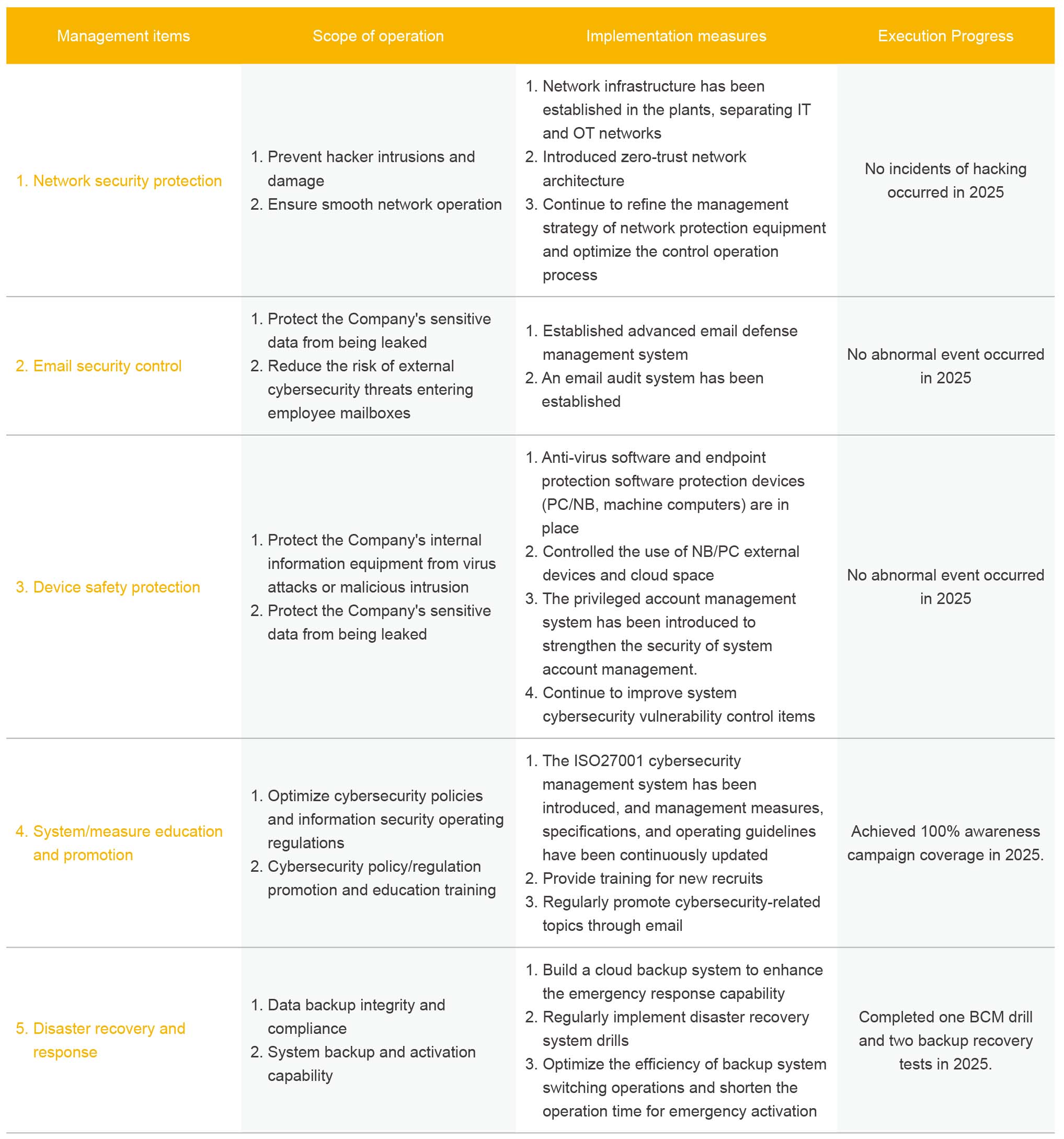
Cybersecurity management measures and implementation effectiveness

04
Risk Management

Kaori is well-aware of the challenges that risks may pose to business operations. To minimize the influence of the external environment, managers of various business segments within the Company have identified and defined risks that are relevant to operations, so that they can be properly managed to ensure continuity. By taking risk identification, risk assessment, risk management, and risk response measures, Kaori aims to minimize potential risks and even turn them into opportunities. The PDCA cycle has been incorporated into risk management to facilitate real-time corrections and improvements and thereby protect the interests of the Company, employees, shareholders, customers, and suppliers.

Risk Management Policies and Approach

  • Policy: Comply with laws and regulations related to finance, environment, labor, and safety and health to ensure the normal operation of the Company and the interests of shareholders. 
  • Goal: Effectively monitor and manage various risks to reduce the impact in the event they occur. 
  • Commitment: Utilize due diligence and early warning communication methods to implement the Company's established codes, ensuring the protection of stakeholders' interests. 
  • Management Measures: 
  1. We implemented the Risk Assessment Procedures in accordance with the ISO 9001 Quality Management System, ISO 14001 Environmental Management System, and ISO 27001 Cybersecurity Management System.
  2. In response to the possible impact of climate change on the business environment, we have formulated management measures to reduce corporate risks.

Risk Analysis Outcome and Response/Management Strategies For 2024

Corporate Governance and Risk Management ESG Report

By deepening the corporate culture of operating with integrity through various governance principles and regulations, we aim to strengthen the implementation of the board's functions and ensure the maximum interests of all stakeholders through a corporate governance system that emphasizes accountability and integrity.