Friendly Workplace

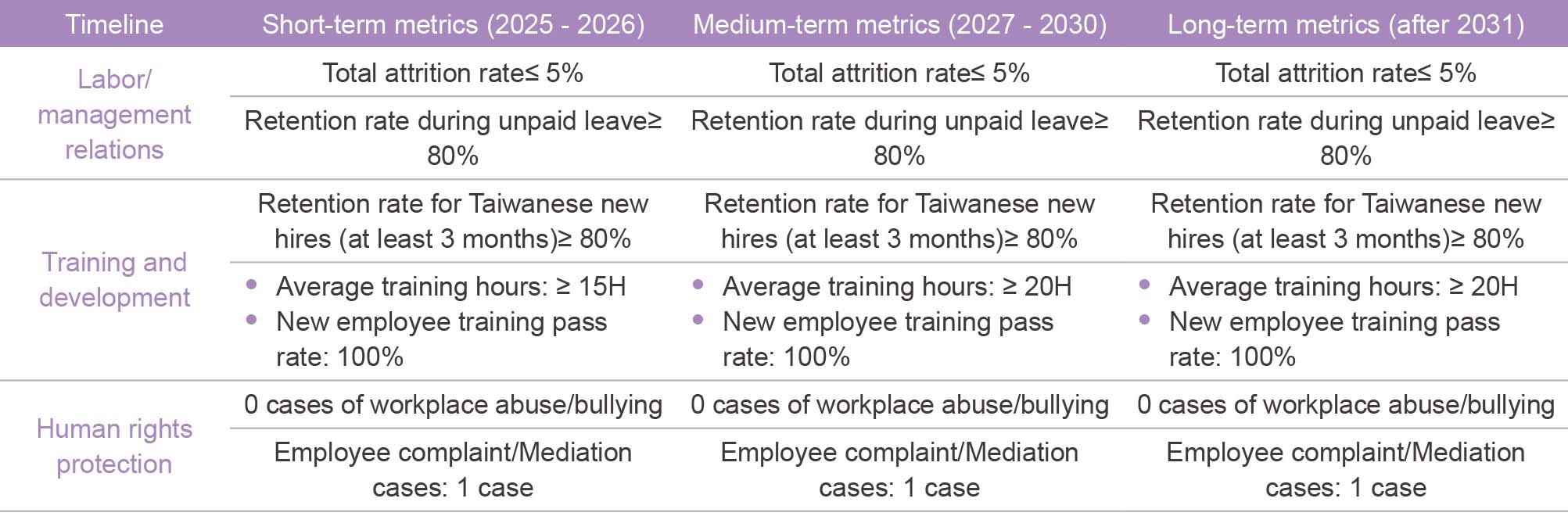
To establish a sustainable development enterprise, one of Kaori's sustainability missions is to create a friendly workplace. This includes talent attraction and retention (salary and benefits), employee training and development, labor-management relations, training and development, human rights protection. The short-, medium-, and long-term targets for managing these material issues are outlined in the table below:

Material issue objectives and performance 

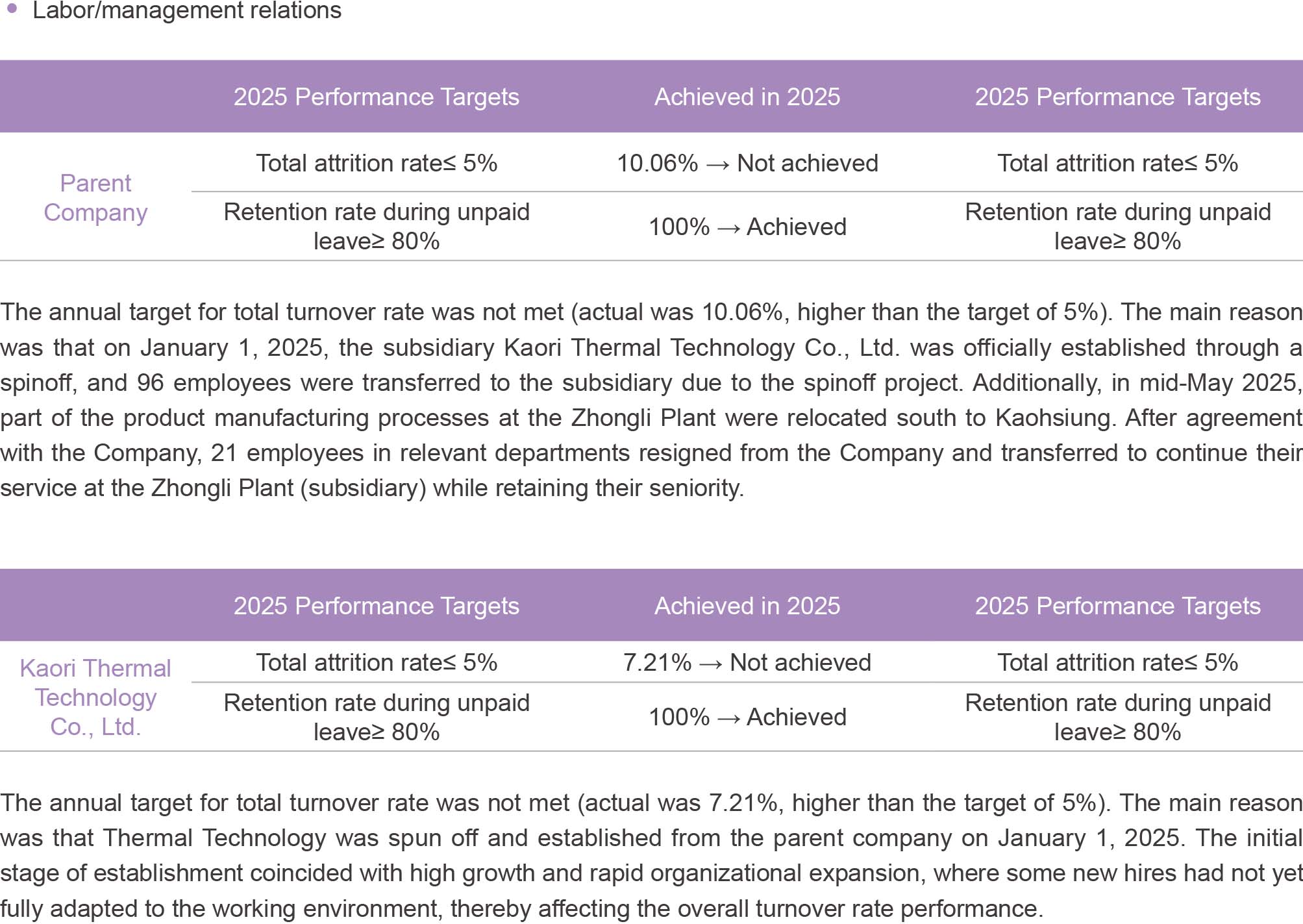
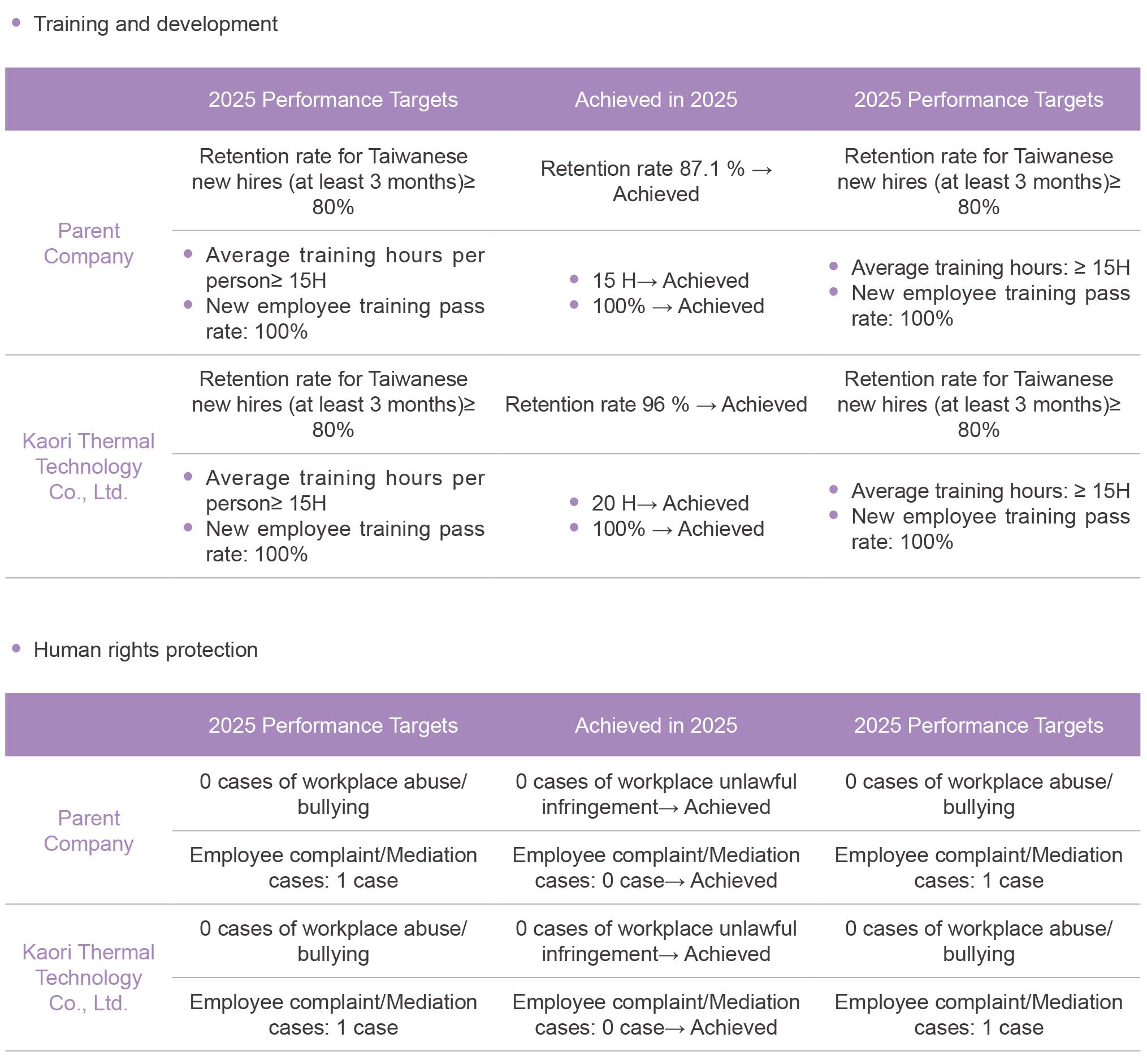
Kaori is committed to building a friendly workplace and complying with GRI standards: We are committed to creating a caring and nurturing environment for employees, fulfilling the responsibility of talent cultivation and retention as the driving force for the sustainable development and growth of the Company. Kaori has developed short-term targets and related implementation plans based on key areas such as labor relations, training and development, human rights protection, ethics, and health and safety. The performance goals and achievement levels over the past two years (as shown in the table below) aim to retain suitable and high potential talent, thereby enhancing the Company's sustainable competitiveness.

2025 Sustainable Highlights Performance

Leads the Way with First Third-Party Human Rights Due Diligence Assessment

0 %

ISO 45001:2018 Occupational Health and Safety (OH&S) Management System

0 %

0Cases
Human Rights Protection

Kaori values human rights and enforces labor policies and a proper work spirit fairly and respectfully. The Company is committed to creating a culture of fairness, inclusivity, and open communication as well as shaping a work environment that protects human rights.

Workplace Health Promotion

Awarded the “Healthy Workplace Certification - Badge of Accredited Healthy Workplace” by the Health Promotion Administration, Ministry of Health and Welfare. And Awarded as an outstanding enterprise in the “Active Evaluation of Occupational Health and Safety Performance Disclosure in Corporate Sustainability Reports” by the Occupational Safety and Health Administration, Ministry of Labor.

Talent Cultivation and Development

In 2025, employees completed a total of 10,182 hours of training. With a total of 676 employees during the year, the average training hours per employee were 15 hours. In addition, the total expenditure on training and education in 2025 was NT$707,068, resulting in an average training cost of NT$1,046 per employee.

Diverse Welfare Systems

Kaori arranges Labor Insurance and National Health Insurance coverage for employees as required by laws and ensures that employees are paid the benefits they are entitled to. By promoting a harmonious labor-management relationship and catering to employees' wellbeing and health, the Company aims to help employees grow in life and at work. In 2025, the Company provided a total of NT$1 million in subsidies for childbirth and childcare.

Our Focus Issues

01
Talent Management Policy and Commitment

Kaori complies with labor-related regulations by establishing the "Employee Work Rules" and the "Occupational Safety and Health Work Code, including the Safety and Health Organization and Personnel Structure," which have been submitted to the relevant government authorities for approval. These rules legally ensures labor conditions and protecting employees' safety and health rights. The Company provides a healthy and safe working environment, fosters diverse and open labor-management communication channels, and offers fair compensation and promotion opportunities. Additionally, a comprehensive training and development system is in place to cultivate employee professionalism and protect trade secrets. Kaori also ensures a robust benefits system and creates a warm and harmonious work atmosphere. Through a transparent incentive bonus and profit-sharing system, employees are encouraged to contribute their skills and performance confidently, growing and developing alongside the Company, thereby laying a strong foundation for sustainable operations. 

The Company's talent management policy is as follows:

02
Manpower Structure - Diverse and Inclusive Workplace

By the end of 2025, the total manpower of the subsidiary Kaori Thermal Technology Co., Ltd. was 361 people, including 193 regular employees, 1 foreign white-collar worker, 7 short-term part-time employees, 157 dispatched personnel, and 3 contractor personnel. Likewise, 1 person with disabilities was employed in accordance with relevant regulations. In addition, by the end of 2025, the total manpower of the subsidiary Kaori Technology (Ningbo) Co., Ltd. was 75 people, all of whom were regular employees, and no persons with disabilities were employed yet.


Please refer to the workforce demographic distribution data provided in the 2025 Sustainability Report.
https://esg.kaori.com.tw/uploads/images/report/Topic_en/people/Kaori_2025_ESG_Report_CH7_EN.pdf


03
Talent Cultivation and Development


The Company has “Training Management Procedures” in place to help employees expand knowledge and skills in ways that contribute to the organization's competitiveness. Kaori strongly believes knowledge and skills to be the key to improving work efficiency and quality, which in turn contributes to the Company's sustainable development goals. The Company offers various ways and opportunities for further education based on core competencies. Training activities and talent development programs are promoted, starting from the Company's operational strategies and linking them to the professional skills training blueprint. Employees are subsidized for taking on-the-job training and external training to improve professional and language skills. It is the Company's intention to support employees with the training resources needed. Department heads and employees have the opportunity to take part in company or department-level training courses and seminars to prepare themselves for future trends and projects. Employees are encouraged to take advantage of the complete range of training options the Company has to offer to grow their professional capacity and competitiveness. All new recruits are required to undergo complete general knowledge training and orientation when commencing duty. Through a combination of manuals, practices, and exams, new employees are quickly brought up to speed and readied for the tasks on hand. We provide all permanent employees with a training blueprint that they can follow to advance their careers within their respective departments and make persistent improvements to training resources within and outside the organization. By having managers participate in various meetings, we help them develop adequate understanding of how each department functions and applicable company policies, so that they may grow to undertake greater responsibilities in the future.

04
Employee Satisfaction Survey

The Company conducts an annual employee satisfaction survey to collect employee feedback and discloses an analysis of the survey results. The survey covers employees’ opinions on the work environment, management systems, and employee benefits. For example, employees expressed expectations for supervisors to take a more proactive approach to addressing cross-departmental communication and subordinate needs. In response, the Company has planned future initiatives to enhance management effectiveness and optimize communication in the identified areas for improvement, with the aim of continuously improving employee satisfaction and workplace quality.

Survey Scope

  • Coverage: Kaori Headquarters 
  • Respondents: All employees Survey 
  • Period: May 7–26, 2025 Survey 
  • Results: Average score of 71 points

Implementation and Follow-up of Improvement Measures

At the all-employee meeting held on November 3, 2025, the Company communicated improvement measures and provided feedback on the issues raised in the survey, thereby strengthening two-way communication between the Company and its employees.

05
Salary Policy

The Company sets salaries at levels that reflect employees' skills, professional capacity, experience, and individual performance. The promotion system has also been designed to be fair and open to employees. The Company strives to maintain equality between genders and offer equal compensation for employees with the same job role. The Company does not differentiate by gender, ethnicity, religion, political association, or marital status. Kaori regularly examines the salaries offered by industry peers to ensure that its compensation and welfare policy remains competitive at attracting and retaining talent. For new recruits, salary is determined based on professional capacity, technical know-how, experience, and work-related skills. Existing employees, also have salary levels and benefits determined according to performance. The Company calculates compensation and benefits in accordance with the laws of Taiwan, and entry-level employees are offered salaries that are higher than the local minimum wage on average. For senior employees, the Company has a talent retention program that offers special benefits such as life insurance and full health checkups. Employees that exhibit outstanding performance are entitled to extraordinary salary adjustment as encouragement. In response to the expansion of the Company's operation scale, the "Remuneration Policy" has been formulated.

Please refer to the Salary Policy information provided in the 2025 Sustainability Report.
06
Human Rights Protection

Kaori values human rights and enforces labor policies and a proper work spirit in a fair and respectful manner. The Company is committed to creating a culture of fairness, inclusivity, and open communication as well as shaping a work environment that protects human rights; it goes to great lengths to incorporate relevant values into employees' work activities and corporate culture. In addition to complying with national laws, the Company protects workers out of respect for their human rights and observes international conventions regarding gender equality, prohibition against all forms of discrimination, forced labor, child labor, and avoidance of long work hours. We do not tolerate any form of harassment, discrimination, or any behaviors that are against employment laws. Kaori reported no human rights violations in 2025. The Company completed its first third-party human rights due diligence during the year, in accordance with international human rights conventions, and continues to foster a culture of diversity, equality, and inclusion.

Human Rights Due Diligence Process

The results of the human rights risk analysis indicate a medium-low level of risk


Labor-Management Communication

Good labor-management communication helps the Company improve weaknesses and develop the solid foundation needed to raise competitiveness. The Company provides a broad diversity of communication channels that employees can use to express opinions. Kaori believes that effective communication and bilateral interaction between labor and management is a useful way of uniting employees.

Employees who have physical or mental disabilities are offered assistance from a variety of sources; meanwhile, efforts are made to learn and adjust their workload and to provide care, support, and assistance where possible.

Employees are able to express opinions through the Employee Welfare Committee, labor-management meetings, the grievance mailbox, and the grievance hotline. Kaori has the “Regulations for Implementing Labor-Management Meeting” in place to support a harmonious work environment. Labor-management meetings are held once every three months to facilitate communication and cooperation between labor and management for the benefit of both sides. The Company also ensures that all of the employees' opinions, suggestions, and feedback are handled by dedicated personnel. Meanwhile, systems have been implemented to protect employees from all forms of retaliation and threat. Although the Company has not established a union or signed a collective bargaining agreement, it convenes labor-management meetings on a regular basis. 

The parent company held a total of four such meetings in 2025, with 8 participants per meeting. No grievance were raised internally and no misconduct report was raised externally during the year. Kaori handled the report according to relevant policies and will continue following up on subsequent progress while taking preventive measures. The subsidiary Kaori Thermal Technology Co., Ltd. Held a total of four such meetings, with 10 participants per meeting. No grievance were raised internally and no misconduct report was raised externally during the year. Kaori handled the report according to relevant policies and will continue following up on subsequent progress while taking preventive measures.

Grievance Channels

Grievance mailbox:jocelyn@kaori.com.tw
Grievance hotline:03-4527005 #236
07
Occupational Safety and Health

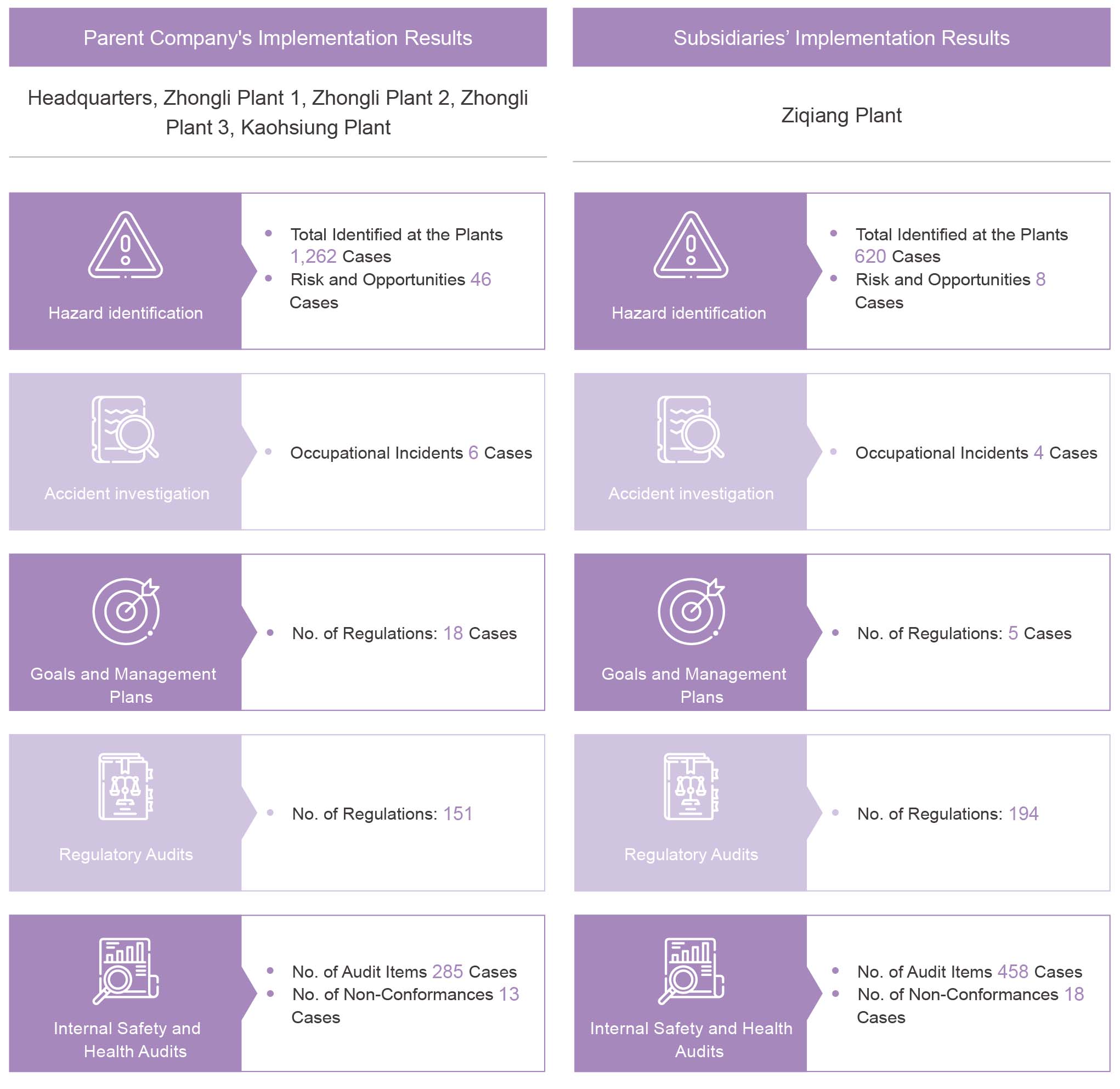
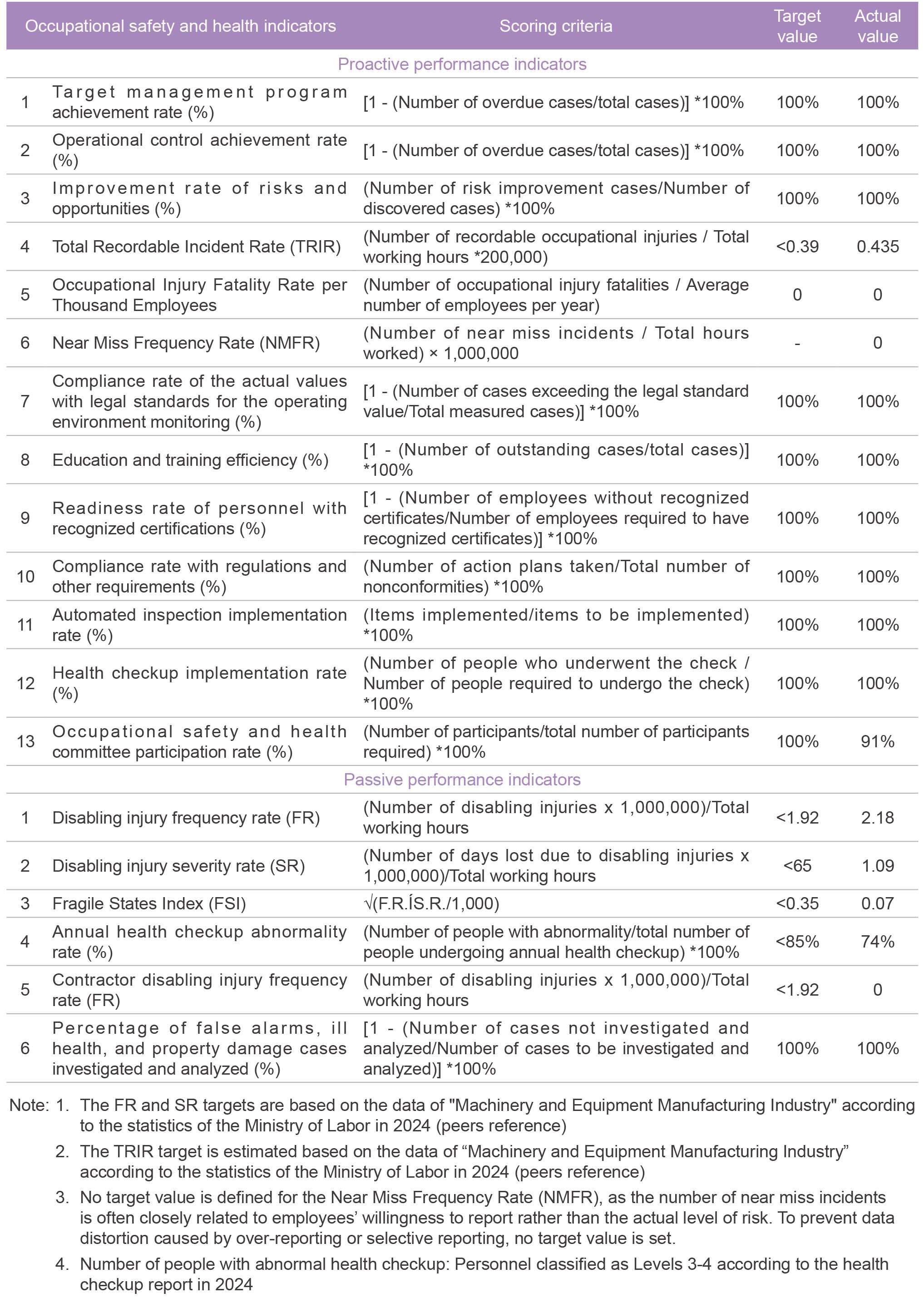
2025 Benchmark Implementation Results

Implementation of safety and health indicators in 2025

Occupational Safety and Health Training and Promotion

In order to reduce occupational hazards and establish a safety culture at Kaori, we first emphasize safety and health education and training. Only by instilling safety awareness in everyone can we unite the entire team to create a safe working environment together.

Themes and focuses of occupational safety-related training in 2025: 

  1. Occupational Safety and Health Training at the Plant: Safety and health awareness is promoted irregularly during monthly meetings. The topics covered include recent plant safety issues, current social events, and themed training sessions. 
  2. Occupational Incident Investigator Training: Employees received training to become occupational incident investigators, enabling them to identify the root causes of workplace accidents and implement corrective measures to reduce the incidence of occupational injuries. 
  3. Safety and Health Training for Contractors: As contractor operations are often a source of safety vulnerabilities within the plant, Kaori conducted a safety and health training session specifically for all outsourced contractors on April 18, 2025. This initiative aimed not only to strengthen overall plant safety and hygiene but also to foster shared growth and address potential safety gaps. 
  4. Prevention of Unlawful Infringement in the Workplace: Workplace violence is not limited to physical assaults; it also includes verbal abuse, exclusion, and sexual harassment. Since most incidents stem from inappropriate verbal expressions, Kaori invited a counseling psychologist to use their professional knowledge and experience to guide employees on how to communicate effectively and express their thoughts and emotions in a kind and respectful manner. 
  5. New employee education and training, occupational safety and health management personnel training, fire management personnel training, plant fire drills, forklift operator training, training for pressurized gas equipment operators, first aid personnel training, training for stationary crane operators, training for pressurized gas equipment operators, hypoxic work supervisor training, respiratory gear fit test training, acetylene welding equipment operator training. 
  6. Ergonomic Hazard Prevention Training Repetitive tasks are often a primary cause of musculoskeletal injuries. To address this, Kaori specially invited a physical therapist to visit the plant workplaces, helping employees identify the ergonomic risks associated with their jobs. The therapist also provided preventive measures and self-directed musculoskeletal exercises to alleviate physical discomfort caused by prolonged work. 
  7. Fire Self-Defense Fire BrigadeTraining: The main purpose of fire self-defense fire brigade training is to enable on-site employees to respond proficiently according to their assigned roles (notification, fire suppression, and evacuation) during the initial stages of a fire before the fire department arrives, thereby fulfilling the initial disaster response capability of “protecting one's own property”. This training aims to elevate members' alertness and response capabilities, ensuring timely fire suppression and effective evacuation guidance under safe conditions to minimize casualties and property damage.

Occupational Safety and Health Management Review

To ensure that the occupational safety and health management system can continue to maintain its appropriateness and effectiveness, and comply with national and international standards, all occupational safety and health management related operations, activities, and services are compliant with occupational safety standards through the leadership commitment of the senior management and all occupational safety and health management-related operations, activities, and services. The 2025 review meeting was held on January 22, 2026, with a total of 37 participants.

Friendly Workplace ESG Report

At High Power, we deeply understand that employees are crucial partners in the company's journey to become a world-class organization and achieve sustainable development. We are committed to creating a friendly and healthy workplace, shaping an environment that is free from discrimination and promotes equality.